Perach Community Village in Rosh Ha’ayin is home to 208 adults with intellectual and developmental disabilities, on a 110-dunam (27-acre) campus with residential care, medical treatment, occupational and creative workshops and sports facilities. Ahead of Israel’s national election, about half of the residents aged 21 and over took part in a programme built around a single question: what does it mean to cast a vote?
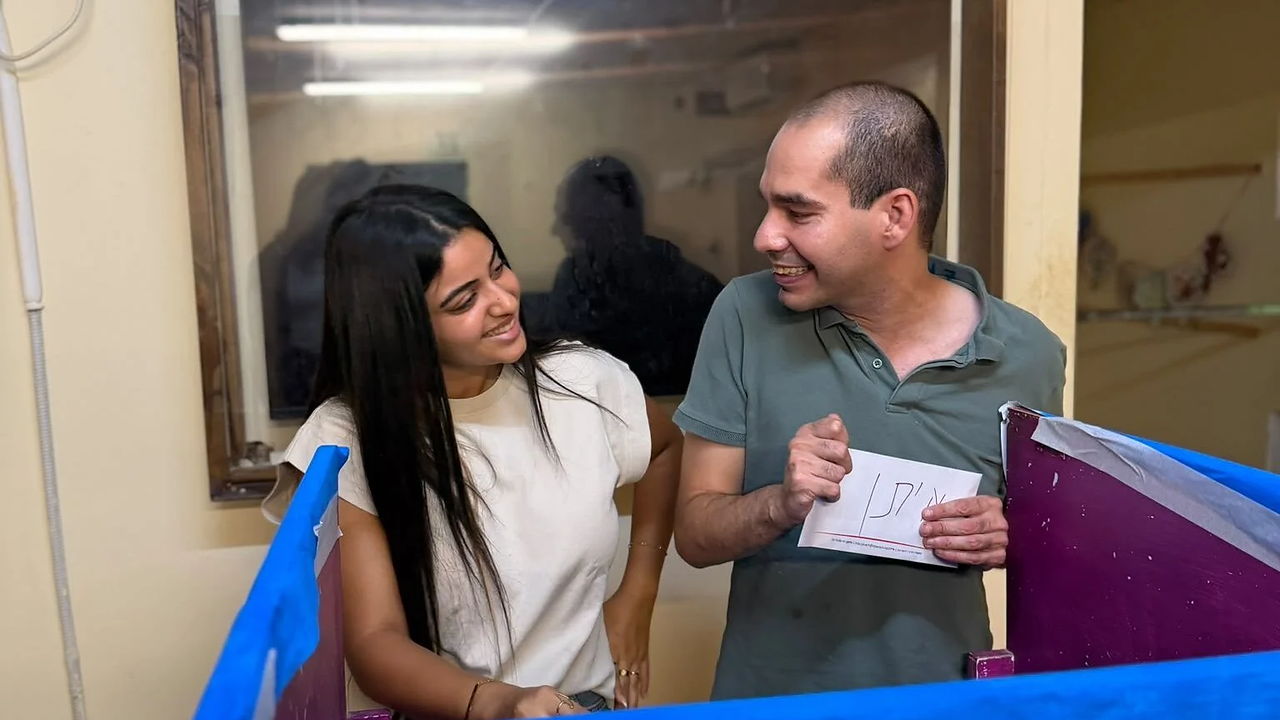
Over several weeks they studied voting rights, the structure of the political system and the parties running, and practised at an accessible voting station set up on the campus itself. National service volunteers working at the village folded the election into a wider lesson about choice in everyday life — what to wear, what to eat, where to go — so that the ballot would sit inside something already familiar.
The rules this year were stricter than in the past. Family members and guardians, who in previous elections were allowed to accompany residents into the booth, were barred from doing so. Residents voted alone, with staff or an election official assisting only with the physical tasks.
“We’re very careful to educate them, and not direct them.”
Yafit Bargig, director of the Perach Community Village campus
Independent choice is the point of the programme, and of the care model at the village more broadly: not a result on a ballot slip, but the experience of making a decision that is genuinely one’s own.